
'The money is readily available to the depositors.'
We have not been able to communicate in a very articulate manner and clear manner on the merger as earnings were due, says HDFC CEO.

In yet another move to close the regulatory gap between banks and shadow banks, the Reserve Bank of India (RBI) has mandated exposure limits to the non-banking finance companies, in line with commercial banks. In the large exposure framework released on Tuesday, the regulator capped aggregrate exposure of NBFCs which are in the upper layer toward one entity at 20 per cent of capital base. The limit can only be extended by another 5% with board's approval. For a particular borrower group, the cap is at 25 per cent, with additional 10 per cent if exposure is towards infrastructure.
Axis Bank's acquisition of Citibank's consumer finance business for Rs 12,325 crore - the second biggest deal in the Indian banking sector - is seen as a good deal at a good price. The acquisition enables Axis Bank to close the gap with competition in some key segments such as credit cards. At the same time, there are some key issues that are crucial for the deal's success, apart from the fact that it will take some time for Axis to reap the full harvest of its investment.

The insurance regulator wants the removal of the minimum entry capital requirement of Rs 100 crore for setting up an insurance business in a bid to facilitate the entry of multiple players such as standalone micro insurers and niche players. Debasish Panda, chairman, Insurance Regulatory and Development Authority of India (Irdai), said it should be left to the regulator instead to decide what should be the entry fee for interested players, depending on the size of the business and operations. According to the current norms, insurers are required to have a minimum paid-up capital of Rs 100 crore.

Experts say companies wanting to launch IPOs will have to scale back their expectations given the fall in valuations.

'From our perspective, it will bring additional customers and from their perspective, it will get them younger customers.'
At a time when banks are engaged in a fierce battle to gain market share in the credit card segment, Citibank India has been losing its share, both in terms of outstanding cards and spends in the last few years. Still, average spends on Citi cards are higher than any other Indian bank. Last year, the global banking behemoth announced exit from its consumer banking franchises in 13 markets across Europe, Middle East and Asia, including India, citing lack of scale.

Tata Sons has pocketed Rs 11,164 crore by tendering 24.81 million shares in the Rs 18,000-crore share repurchase programme by the group's flagship firm Tata Consultancy Services (TCS). State-owned insurer Life Insurance Corporation (LIC) tendered 1.17 million shares to take home Rs 528 crore. Small shareholders - those holding shares worth up to Rs 2 lakh - tendered 25.3 million shares in the buyback, 4.22 times the 6 million shares reserved for them in the buyback.
With the banking regulator lifting restrictions on HDFC Bank's digital initiatives, the largest private sector lender is now girding up to launch a clutch of customer-facing applications (apps), which will act as stepping stones in its journey to morph into a technology (tech)-led bank from a conventional one. Following repeated outages in its digital offerings, the Reserve Bank of India (RBI) had barred HDFC Bank from issuing new credit cards in December 2020 and prevented it from going ahead with its digital launches. The embargo on issuing credit cards was lifted in August 2021 and the ban on digital launches was lifted last week.

Once stability returns to the secondary market, companies that have obtained approval from Sebi will start tapping the market.

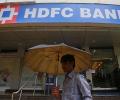
While HDFC Bank has vowed to recoup its lost market share in the credit card segment in three to four quarters by aggressively sourcing new cards, brokerages believe it is a little hard to come by, given how competitive the landscape has become, with other players in the market becoming equally aggressive to gain market share. Kotak Institutional Equities in its report on Monday said, "We would like to believe that the recovery in market share is likely to be gradual, if any. "All the key players, including Axis Bank, are now willing to expand their credit card portfolios as they have tested quite well against Covid-19."

Under the new model, the surplus distribution in the participating policyholders' fund has been modified to 90:10 in a phased manner, wherein 90 per cent will go to policyholders and 10 per cent to shareholders. Further, 100 per cent of the surplus generated out of the non-participating business will be available for distribution to all shareholders.

The Securities and Exchange Board of India (Sebi) has cleared the draft red herring prospectus (DRHP) of the state-owned Life Insurance Corporation of India (LIC). According to investment banking sources, the so-called final observations were issued by the market regulator on Tuesday evening. Following the market regulator's nod to the IPO papers, the insurer can launch its share sale. However, LIC may not launch its IPO immediately given the current volatile market conditions.

The National Stock Exchange (NSE), which is once again in the eye of a storm due to the co-location scandal, has said it has taken several transformational steps in the past few years on the regulatory, technological, and surveillance fronts to help improve stakeholder experience and to protect investors. Senior officials of the exchange briefed the media over the steps the exchange has taken on various fronts following changes at the helm with former managing director and chief executive officer Chitra Ramkrishna's ouster in December 2016. "Over the last few years, we have been looking to modernise and transform the entire value chain of technology.

Market regulator Securities and Exchange Board of India (Sebi) in its investigation against Indiabulls Housing Finance has found the mortgage financier non-compliant with regards to unavailability of certain information on its website as well as its internal policy. Thereby, it has directed the company to take corrective measures and inform the stock exchanges in a months' time. Several public interest litigations (PILs) and FIRs were filed against Indiabulls Housing Finance back in 2019, alleging irregularities, siphoning of funds, and other violations committed by the promoters of the company.

The mysterious Himalayan 'yogi' who allegedly advised Chitra Ramkrishna, former managing director and chief executive officer of the National Stock Exchange (NSE), on important matters of the bourse could be none other than Anand Subramanian, according to a letter written by former NSE chairman Ashok Chawla to the Securities and Exchange Board of India (Sebi). Subramanian was group operating officer of the NSE and advisor to Ramkrishna during 2015-16. He joined as chief strategic advisor in April 2013.

The National Stock Exchange (NSE) has got into firefighting mode to control the reputational damage caused by the Securities and Exchange Board of India's (Sebi's) order against its former managing director and chief executive officer Chitra Ramkrishna and others. According to sources, the exchange's management over the past one week has met several key stakeholders, including officials in the finance ministry and Sebi, major shareholders, and trading members, trying to distance itself from the controversy. The exchange plans to hold more meetings in the coming week to ensure that trading volumes and confidence in the bourse don't get impacted, they added.

Members of the Monetary Policy Committee (MPC) felt that though the Indian economy was resilient in the third wave, it, however, lost some momentum and with inflation likely to soften, there is room to continue with the accommodative stance and support revival, the minutes of the MPC meeting released on Thursday revealed. The six-member MPC voted to keep the policy rate unchanged and continued with the accommodative stance at its meeting on February 10. However, external member Jayanth Verma voted against the stance because he felt a switch to neutral was long overdue and the current stance has become counterproductive and deflects focus away from addressing recessionary trends that date back to at least 2019.
 © 2026 Rediff.com - Advertise with us - Disclaimer - Privacy Policy - Sitemap - Feedback - About us - Terms of use - Grievances